If you’ve been feeling like the old SEO rules don’t work anymore, you aren’t alone. The landscape has shifted. Today, AI in search engine ranking is no longer a “future” concept; it is the core engine driving every result you see on Google. Understanding how AI in search engine ranking works is the difference between your blog being a ghost town or a high-traffic hub.
I remember the days when you could just “stuff” a few keywords into a post and hit page one. Those days are gone. Now, search engines have evolved into sophisticated “thought partners” that understand context, emotion, and intent. In this guide, I’m going to pull back the curtain on how AI in search engine ranking actually functions and how you can use it to your advantage.

1. The Shift from Keywords to “Entities”
In the past, Google looked for specific words. Now, thanks to AI in search engine ranking, it looks for entities. An entity is a well-defined thing or concept—like a person, a place, or a specific technical idea.
When you write about AI in search engine ranking, the AI isn’t just looking for those four words. It’s looking for related concepts like “machine learning,” “natural language processing,” and “user intent.” To rank well, you need to build “Topical Authority.” This means instead of writing one-off posts, you should create a web of content that proves you understand the entire ecosystem of your niche.
2. Deciphering Intent with BERT and MUM
Two of the biggest players in AI in search engine ranking are BERT and MUM.
- BERT helps Google understand the nuance of human language (like the word “for” or “to” in a search query).
- MUM (Multitask Unified Model) is 1,000 times more powerful and can understand information across different languages and formats (like images and videos).

Because of these models, AI in search engine ranking now prioritizes “Intent Satisfaction.” If a user asks a complex question, the AI wants to provide a comprehensive answer that saves them from clicking five different links. If your content provides that “all-in-one” value, you become the AI’s favorite source.
3. The Power of “Experience” (E-E-A-T)
With the explosion of AI-generated “fluff” content, search engines are desperate for the human touch. The AI in search engine ranking systems are now trained to hunt for Experience.

Can you tell a personal story? Can you share a unique case study? Google’s AI looks for first-person language (“I found that…” or “In my experience…”) to distinguish expert human content from robotic replicas. To win at AI in search engine ranking, you must prove you’ve actually “lived” the topic you’re writing about.
4. Generative Engine Optimization (GEO)
You’ve likely seen the AI Overviews at the top of Google. This is the new frontier. AI in search engine ranking now includes a process called “Answer Engine Optimization” or GEO.
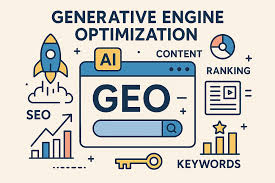
To get cited in those AI-generated summaries, your content needs to be:
- Direct: Answer the main question in the first paragraph.
- Structured: Use clear H2 and H3 headings.
- Factual: Use data, statistics, and citations that the AI can verify.
The more “ingestible” your content is for a machine, the higher your chances of appearing in the coveted AI box.
| Feature | Traditional SEO | AI-Driven SEO (2026) |
| Primary Goal | Ranking #1 in Blue Links | Being cited in AI Overviews |
| Content Style | Keyword-focused | Entity & Intent-focused |
| Format | Text-heavy | Multimodal (Video, Images, Text) |
| Authority | Backlinks | Trust & Social Proof |
5. Behavioral Signals: The Secret Ranking Factor
Did you know that AI in search engine ranking tracks how users “behave” on your page? This is largely handled by an AI system called RankBrain. It looks at:
- Dwell Time: How long do they stay?
- Scroll Depth: Do they actually read the whole thing?
- Success Rate: Did they find what they needed, or did they go back to the search bar?
If people bounce quickly, the AI in search engine ranking assumes your content isn’t helpful. To combat this, make your intros “sticky” and your layout easy on the eyes.
6. Visual and Multimodal Integration
We are moving beyond text. AI in search engine ranking now analyzes images and videos with incredible precision. If you aren’t using original images with descriptive Alt Text, you are leaving traffic on the table.
Search engines can now “watch” your videos to see if they answer a user’s question. This is why adding transcripts and video chapters is essential for AI in search engine ranking success in 2026. It gives the AI more “surface area” to understand and index your expertise.
7. Technical “AI-Readiness”
Finally, your site’s “bones” must be clean. AI in search engine ranking rewards sites that are fast and technically sound. Use Schema Markup to “talk” directly to the AI. Schema tells the search engine exactly what a piece of data is (e.g., “This is a price,” “This is a recipe,” “This is a review”).
Without clear technical signals, the AI in search engine ranking might get confused about your site’s purpose. Think of Schema as a map you’re giving to a very smart, but very busy, digital librarian.
Wrapping It Up
Mastering AI in search engine ranking isn’t about “gaming” a system. It’s about being more human, more helpful, and more structured than the competition. The AI is simply a tool that tries to mimic human judgment. If you write for humans first, but structure it for the machine, you will win.
The era of AI in search engine ranking is an exciting one because it finally rewards quality over quantity. Gone are the days of 100 low-quality posts. Today, one high-authority, expert-led piece of content is worth its weight in gold.
As you move forward, keep testing, keep learning, and most importantly, keep sharing your unique human perspective. That is the one thing AI in search engine ranking can never truly replace.
Would you like me to generate a specific Schema Markup (FAQ or Article) for this blog post to help it rank even higher?
Future-proof your SEO strategy
This video provides expert insights into the shifting landscape of SEO in 2026, specifically focusing on how author authority and entity-based depth drive AI search citations.
Hi, this is a comment.
To get started with moderating, editing, and deleting comments, please visit the Comments screen in the dashboard.
Commenter avatars come from Gravatar.